
Six things to get right.
Most border trouble starts at home, and most of it is easy to avoid. Check this list before you pack.
Zimbabwe, Zambia, Botswana, Namibia and South Africa all expect your passport to be valid for at least six months beyond the date you arrive. Renew early: appointments get scarce in peak season.
Allow three blank pages for every country you enter. A five-country Southern Africa trip uses more space than you expect, and not having enough pages is a valid reason to refuse you entry.
Every country sorts nationalities into groups: visa-free, visa on arrival, or apply-before-you-travel. Check which one your passport falls into on the official portal. It decides whether you can simply land, or must apply first.
Visa fees and border charges are paid in US dollars. Card terminals at land borders fail often. Bring recent, undamaged notes in small denominations; torn or pre-2009 bills are frequently refused.
Immigration officers may ask for an onward or return ticket and evidence that you can support yourself. A printed itinerary and a card statement settle the question quickly.
Arrival forms ask where you are staying. Write down the lodge name, address and phone number. Don't rely on an email you can't open without wifi.
The KAZA UniVisa
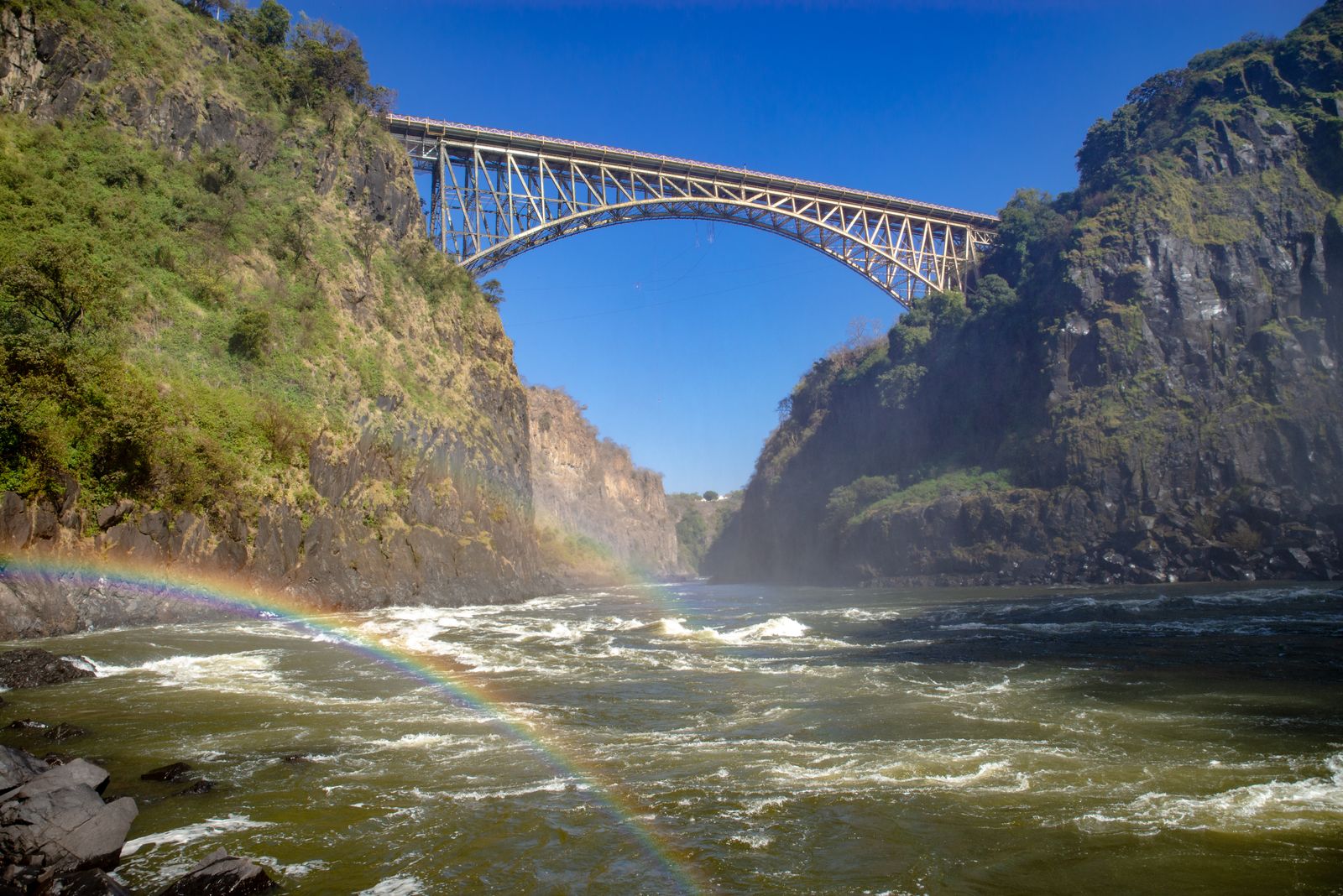
One fifty-dollar visa covers Zimbabwe and Zambia, and you can cross between the two as often as you like. If you plan to see both sides of Victoria Falls (and you should), this is the visa to get.
Southern Africa, passport by passport.
Pick a country to see the essentials. These are the usual requirements for tourist visits. Your nationality may be treated differently, so confirm before you fly.
Vaccinations and the mosquito question.
None of the five countries is a yellow fever risk area. A certificate is required only if you are arriving from, or have transited, a country on the risk list — which includes several East and West African countries. If your route touches one, carry the card.
The Zambezi valley, Chobe and the low-veld are malaria areas, with the highest risk in the wet months from November to April. Speak to a travel clinic about prophylaxis six weeks before you fly, and pack repellent with DEET and long sleeves for dusk.
Make sure the standard vaccinations are current — tetanus, measles, hepatitis A and typhoid are the usual recommendations for the region. Your clinic will advise on rabies if you are spending long periods in remote areas.
Take travel insurance that explicitly covers medical evacuation. Adventure activities at the Falls — rafting, bungee, microlights — are sometimes excluded, so read the wording and declare what you intend to do.
The paperwork that gets families turned away.
Southern Africa takes child protection seriously and enforces documentation at check-in, not just at immigration. If anyone in your party is 17 or under, prepare these in advance.
Carry an original or certified copy of the unabridged birth certificate showing both parents' details. Abridged or short-form certificates are refused.
The absent parent must provide a notarised affidavit of consent. Where one parent has sole custody, carry the court order proving it.
Unaccompanied minors, or children travelling with grandparents or friends, need consent from both parents plus the guardian's contact details and the child's passport.
If you are a legal guardian whose name does not appear on the birth certificate, carry the documentation that proves the relationship.
Bringing your own vehicle: the ZIMRA TIP.
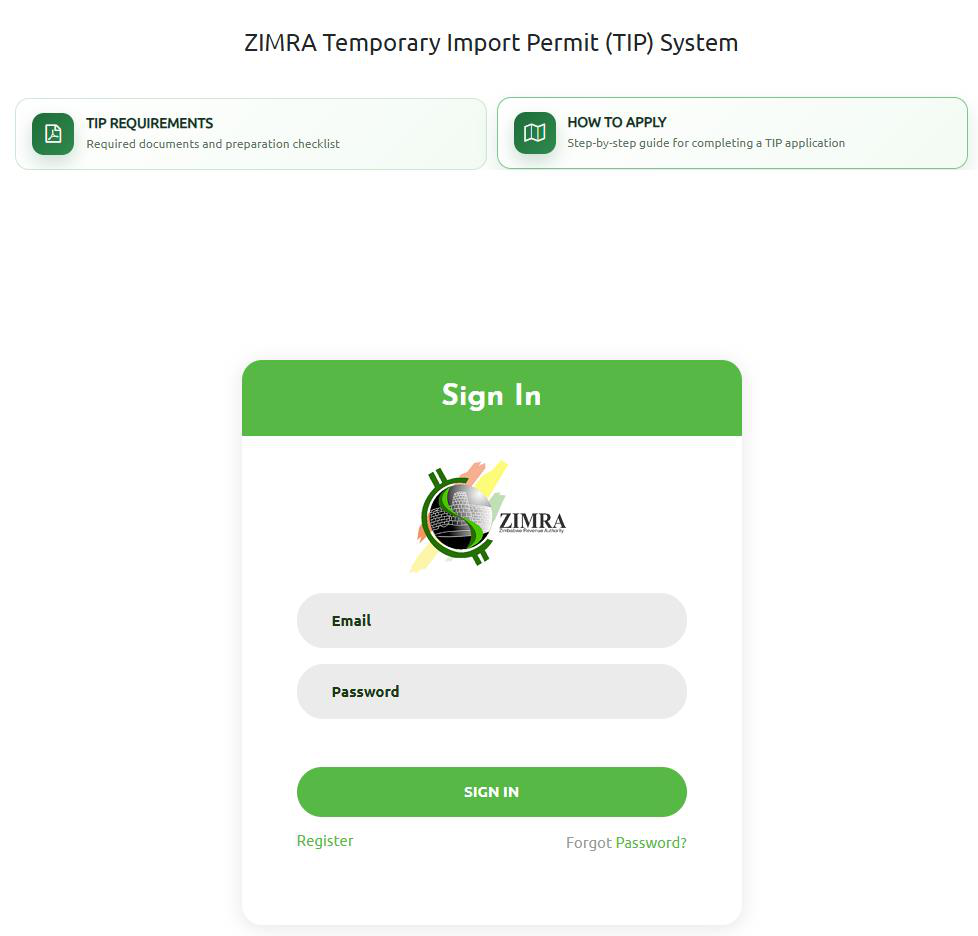
If you are driving into Zimbabwe rather than flying, your vehicle needs a Temporary Import Permit from the Zimbabwe Revenue Authority. It is issued per entry, applied for online through the ZIMRA e-TIP portal, and presented at the border with a reference number.
What the e-TIP portal actually looks like.
Tell us your passport. We'll send back the plan.
Tell us which passports are travelling and where you want to go. We'll tell you exactly which visas you need, what they cost, where to get them and what to carry. If you're booked with us, we handle the applications for you.
This page is a guide, not legal advice. Immigration and customs rules change at short notice and the final decision always rests with the officer at the border. Confirm your own requirements with the relevant government portal or with us before you travel.